How Afolabi Sokeye 10x’d his income in one year
"I was earning about ₦40,000 a month in my final year. In the space of that one year, 2024, I was able to change that."

Promoted
Your Business Needs More Than a Website.
Custom software, automation, web apps, mobile apps and business systems built around how you work.
Build digital systems around the way your business operates.
Explore Software Services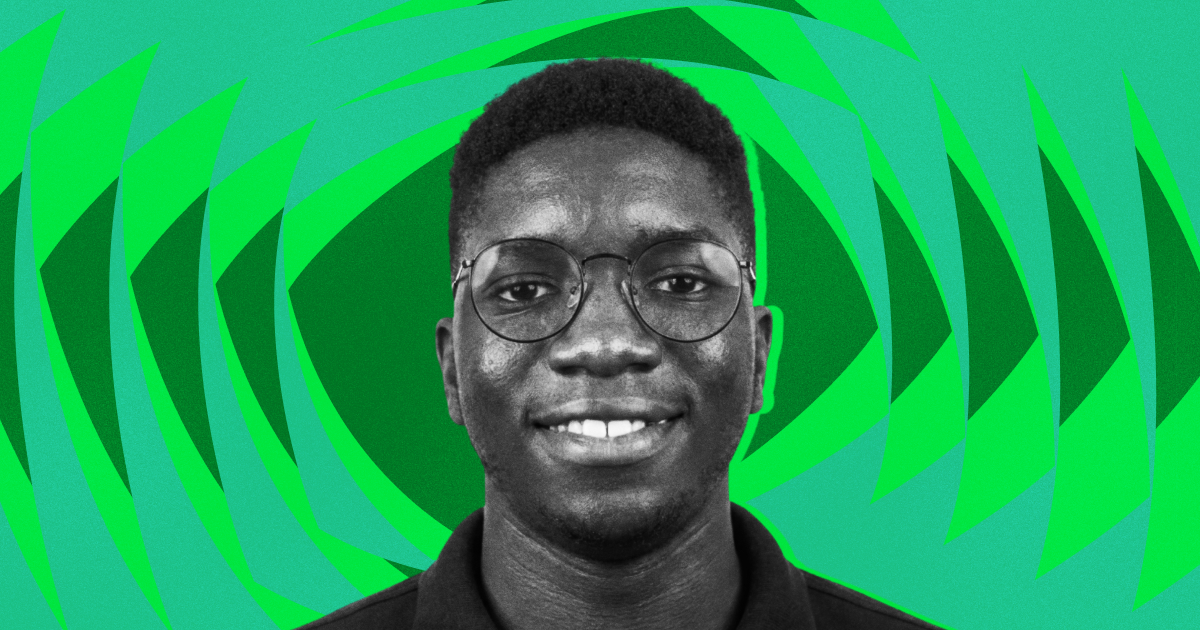
“A moving man” is a fitting way to describe Afolabi Sokeye. Before our call, he had just launched a new product — Salary Index. In four years as a product manager, he has not only been part of teams building products but also launched a few of his own.
As a student at Babcock University, he built products including Domstack, Truetalk, Cloudiby, Chao, and Trakka, working across Nigeria, the US, and the UK.
He has led product at startups, including WetroCloud and TechWings Global, and built a personal brand that now generates referrals.
In this conversation, he talks about the moment he chose school over a startup that Moniepoint and OPay later built, and Chowdeck may have acquired, why he says he would rather solve any problem than one particular problem, how he 10x’d his income a year after he graduated, and what actually drives the curiosity he says defines him.
If your career were a movie, what would the title be, and why?
I think it would be The Product Whisperer. I’ve always been in love with understanding problems and building solutions to them, not necessarily digital ones, just anything that solves a problem for people or brings people together. Whisperers have a lot of knowledge about a certain field; they know the things the average person wouldn’t know. That’s why I think it’s a fitting title for how my career has gone.
How did you get into product management?
I met my roommate in university, a software engineer, and we had the same mindset: we wanted to solve problems around us. The first thing we built was an e-library for our university during COVID, when there were no books and people needed to read for exams online. We saw that gap coming and solved it.
By 2022, I asked myself what career would let me do all the things I already liked doing: understanding people, coming up with solutions, and rallying a team around them. The research led me to product management.
Separately, I’d been doing community management with Gen Z Techies, but that was volunteering, not a career move. Eight months after I decided product management was the path, I got a referral from a CEO I knew, who brought me in as a product manager.
At one point, you were considering quitting school to build a startup. Why?
In 2022, my co-founder and I noticed a problem at restaurants around Babcock University. Bank transfers weren’t as efficient then as they are now, and businesses preferred card and cash. One of my co-founder’s friends tried to transfer to a business and couldn’t, and that got us researching.
We found a very big gap in the market that nobody had solved, not Moniepoint, not Paystack. The people who had solved offline payments before were solving it for blue-collar and market traders, not restaurants or high-end chain stores.
We went to different restaurants in Ikeja, interviewing them directly, and found a second problem: branches only used one account number, so they had to send money to head office manually before they could bank it. We came up with a solution.
That was the first time we’d gone that deep into fintech. Then payment regulations came in that we didn’t expect. We reached a point where growing it meant leaving school. We’d already talked to a venture capital firm that was ready to invest $300,000 to $500,000. That was 2022; the economy was lush, and this looked like a promising solution.
My co-founder and I decided between going fully into it or leaving it and continuing school. We chose school. Eventually someone else solved that same problem: Moniepoint and OPay built the POS that let those businesses accept transfers across all their branches.
Do you consider that a mistake?
It’s a personal life decision. I’ve seen other founders drop out and their startups not work out. The way my co-founder and I work is we don’t do anything to risk our life journey. You don’t need to drop out to found a great startup. There will be periods of things moving up, but you have to weigh whether the risk is worth it, and most of the time it hasn’t been. Most of the time it’s better to say, ‘Let’s come back to this later,’ or find another problem to solve.
In 2024, you 10x’d your 2023 income. How did you do that?
When I left university, I asked myself what the next step of my career was, where I wanted to be by the end of 2024.
I took on different roles I thought would help me grow, and the result was increased income. I look at income as an indicator of growth rather than a goal in itself. It was just a sign I’d moved to the next level.
I took on a full-time role and contract roles on the side. You can’t do that volume of work while you’re still in university. Before that, I was earning about ₦40,000 a month in my final year. In the space of that one year, 2024, I was able to change that.
How did you get those roles?
Referrals, mostly. Strangers, friends, family, and people who’ve seen my work. I like writing in public, on Twitter, on LinkedIn, and offline too. I’m a community person; I’ve run large-scale events with Gen Z techies and gathered over 3,000 attendees. People see my work in those spaces and want me to be a part of whatever they’re building, or they refer me. It’s usually one of those two things.
What distinguishes product managers who end up earning well?
It’s mostly mindset. The best product managers are wonderful thinkers, not just in coming up with ideas but in executing them, and that’s why people hire them. The gap is the distance between when you start out and when you’ve already tried things and know the best ways to go.
What should product managers expect to earn at different stages?
Entry level is usually ₦100,000 to ₦250,000. Mid-level is ₦250,000 to ₦500,000. Senior roles start at ₦500,000 and can go up to ₦1,000,000 depending on the role. It’s not one straight path either; technical product managers tend to earn more because of the added technical knowledge, on top of seniority. Mixing the right type of PM role with the right level is what gets you the highest pay.
What’s your unique playbook for getting results?
It comes down to identifying the problem properly. A lot of people, and this isn’t just product management, think they know the problem until they put out the product and customers don’t want it. That’s because they don’t validate.
My secret sauce is problem validation: really understanding what problem is being faced and finding the best way to confirm that the audience you think has it actually has it. I’d say 60% of the work is problem validation, 30% is building, and the rest is the constant feedback loop in between.
Once you’ve figured out the right problem, the job is just to position yourself in front of the people who experience it.
Has there been an idea you got excited about and then walked away from?
There used to be a product called Lara.ng that gave people bus directions for Lagos’s yellow buses. They stopped updating it. When I went looking for directions myself and found their data was outdated, I got curious about why, and that curiosity led me to understand why they’d had to stop. I put out a tweet about wanting to build something similar; it got over 100,000 views, which showed real interest.
I didn’t go ahead with it because I realised why Lara.ng folded in the first place: it was expensive to run, needed a lot of manpower, and there was no easy way to monetise it. People don’t use public buses daily enough to pay for the service. I looked at how Lara.ng tried to monetise it, and none of it worked, so I paused the idea at the end of 2024.
You’ve worked across various sectors. What changes about how you do the job when you switch industries, and what stays the same?
It depends on how the organisation wants to solve problems. Whether it’s oga-led, product-led, or growth-led shapes my strategy. In an oga-led structure, someone at the top has already decided there’s a particular problem to solve in a particular way, and your job as PM isn’t to explain why it won’t work; it’s to find the best way to make it work.
In a startup I’ve founded myself, or a leaner team, my decisions come from market research and my own read of where a problem or industry is heading, not from a directive at the top.
The first thing I do when joining any new company is figure out their core problems: what these people really want or need, then come up with plausible short-term and long-term solutions.
What’s a PM piece of advice you give?
Product managers should lean more on practical experience than theoretical experience. Not that one is over the other, but theoretical knowledge helps you get knowledge; it doesn’t help you get understanding, and you need both.
People always say, ‘Learn this, take this course,’ and that’s fine, but if you don’t apply the knowledge, if you don’t build things or try to solve problems, it’s wasted knowledge. I’d always pick going practical over staying theoretical.
A thing about your career that makes you you?
Curiosity. I feel people are not curious enough. You can see the fact that I’ve tried to found and do many things. It all comes down to the curiosity that I have. I never sit down and say I’m done with something; I take it to the very end. That’s why I’ve been able to reach where I am today, and I’d say it’s what makes me a good product manager.