“I don’t dream of labour”: Chiamaka Amaku on building businesses while keeping a 9–5
From selling hair in university to leading in marketing, Chiamaka Amaku reflects on entrepreneurship, discipline, and AI's impact.

Promoted
Your Business Needs More Than a Website.
Custom software, automation, web apps, mobile apps and business systems built around how you work.
Build digital systems around the way your business operates.
Explore Software Services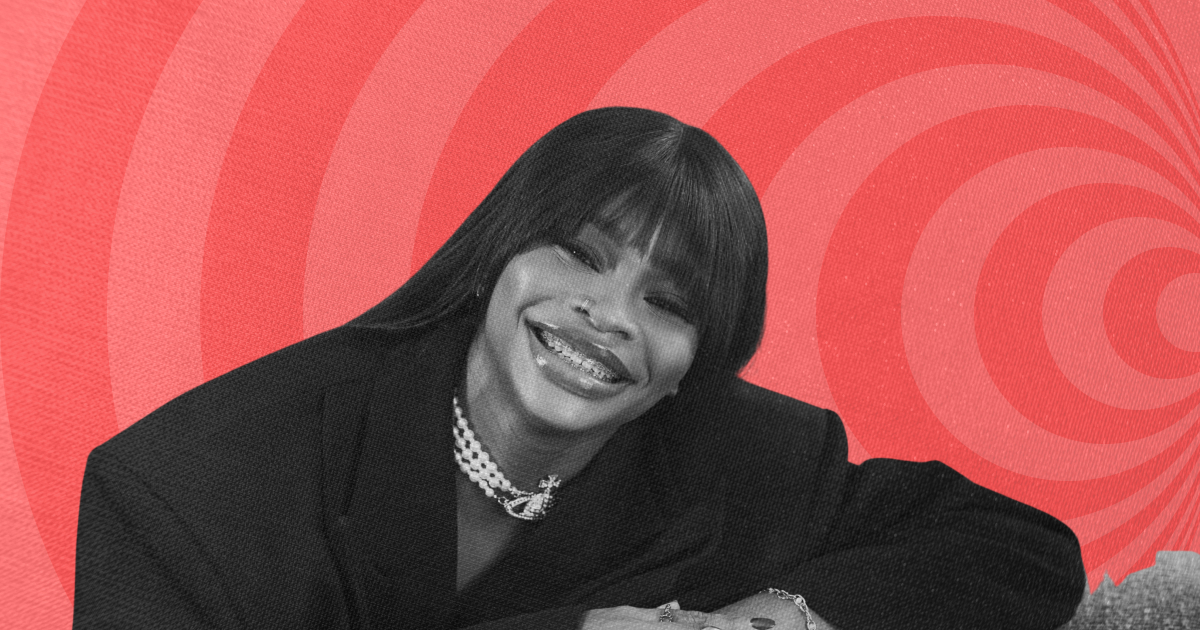
Chiamaka Amaku is many things — a marketer, serial entrepreneur, content creator, and, more recently, an MBA student. What’s remarkable is how she’s managed to juggle all these roles without dropping the ball on any of them.
Her evolution as a professional and entrepreneur is equally compelling. Realising that graduating from university would mean losing the steady financial support she received from her parents, she started a business. It did well, but a year later, when she moved cities and lost the customer base she had built, she turned to social media to keep the business afloat.
She succeeded, and what began as a way to save her business grew into a career of its own. Over eight years, she has worked across social media management, corporate communications, and marketing.
In this edition, she takes us back to the beginnings of her entrepreneurial journey, learning marketing out of necessity, balancing entrepreneurship with a 9-to-5, and the worldview that guides her approach to work.
How did all this start?
Ten years ago, I started a small business selling hair bundles at the university. I’d go around the student hostels to sell. I did that for two years until I left Benin City and moved to Lagos in 2018. There I didn’t have access to my customer base anymore, so I had to learn how to sell online.
This was when e-commerce was becoming dominant, with Instagram accounts, Facebook shops, and all of that. I picked it up fast and realised I was good at it; I didn’t need to study; it just came to me. Then, during my National Youth Service Corps (NYSC), I managed a bookstore. An opportunity came to manage social media, I took it and excelled. That’s how my marketing career started. It’s been eight-plus years now.
Walk me through a typical day.
I wake up and go to the gym or go for a walk. I block out the first two hours for me, not for work, not for business. Then the morning routine: skincare, shower, tea. I clock in for work for six to eight hours, with breaks to check messages and post content for my career. My workers run the business day-to-day, pulling me in only when needed. By 8pm, I’m off the screens. I take a walk, then wind down, maybe squeezing in some more work before bed.
You started several businesses while keeping your 9-to-5. Why keep the job instead of going all in?
Because I was good at it. Simple as that. When you’re good at something, it’s hard to leave. It never felt difficult. It was just one more thing on my plate; I could still do my job well while building businesses. Over time, I realised I’d unintentionally built a career, and it became less about “I’m good at this” and more about wanting to see what I’d invested in through.
What skills helped you maintain both the job and the businesses?
Time management, first of all. I have the same 24 hours as everybody else; I just know what each hour is for: this time it’s gym, this time it’s work, and this time it’s my business. I don’t have 10 minutes to spare. People skills too: I bring a different vibe to teams, I have a likeable personality, and that helps a lot in the corporate world. And communication: upward, downward, and sideways. I don’t mince my words; I don’t say what I don’t mean.
Do you see yourself as a multipotentialite?
Yeah, I’ve been called that. Someone called me that in an interview once, and I thought, “That’s interesting; I’ll take it.”

How do you decide whether to start a new business?
I’ve never started a business just because I spotted a gap. Every business I run connects back to my passion — what I love, what I know I can give. If my estate needs inverters and I happen to know a good supplier, I still won’t do it, because I don’t care about inverters.
Every business gets to a frustrating point, and only the people who genuinely care about what they’re doing can push past it. I don’t want to create another job for myself. If I didn’t care about a business, I’d shut it down before you could blink.
How has being an entrepreneur shaped you as an employee?
More ownership. I know what’s at stake and how to cascade big information into small, digestible pieces. I know how to sell and how to run before anyone says “on your marks” because I’ve done it for myself. And discipline, it goes both ways. What’s required of me at my job, I now require of myself and my team at my business. I also take lessons and frameworks from work and apply them to my own company.
Has running these businesses ever been an issue with an employer?
No, actually. When I was interviewed for my last job, they asked exactly that. I said, “I have people who work for me too. If I take a job, it’s because I love it, and I’ll be committed.”
I can sometimes make my salary in a day. Nigerian employers generally want 100% of your energy, and someone like me can threaten that, so I’m an anomaly. But the people who get it know you need a builder on your team, because builders take ownership like nobody else. It’s an acquired taste; you have to keep proving your capacity is real.
Does loving your work mean you never negotiated hard on salary?
For the first seven years, I was there purely out of love. Then last year, with the economy, I realised love isn’t enough; you have to be compensated fairly. Nigerians are grossly underpaid, and if you work purely out of love, you’ll get taken advantage of. I never really cared about my salary before. But I started demanding better compensation because it should be an exchange — the company gets something from you, and you get something back.
When building a social media campaign, what’s non-negotiable before the first piece of content goes out?
Getting the communication right first: what is the content saying, and what are we trying to achieve? If that’s wrong, there’s no point doing the campaign. I’m militant about it. Typos kill me; bad grammar will send me to my grave. Poor visuals, no. I’m an aesthetic person; clean visuals, nice videos. That’s my non-negotiable.
Read more: How African founders can frame their stories for scale
What separates a good marketer from a great one?
Analytical skills. Marketing is a glamorous job; we see the polished output, the great ad, and the beautiful visuals, but we don’t ask enough about how people actually reacted, what the engagement was, or what emotion it drove. The difference between good and great is being obsessed with data. I do monthly data reports on my own content, minimised, cute versions for social media, but I do it because I know what I’m signalling.
How do you balance creativity with that data obsession?
You have to find the balance yourself; it won’t come naturally if you’re creative. I’m not a numbers person either, but you need to interpret share of voice, click-through rate, reach, and impressions in the simplest terms and use that to drive your creativity. If you’re only creating for yourself, fine, but if you want to reach an audience or influence a decision, you have to study their behaviour.
How do you prove the value of marketing to people outside the marketing team, and what’s the biggest misconception about the job?
I pull the data and show the motion the content is making, which usually quiets people down. The biggest misconception is that we’re just there to waste money and play, because marketing isn’t seen as a core business arm.
How transferable are the skills from marketing to other industries?
Very transferable. Marketing isn’t specialised in one industry; you learn to make any industry consumable to an audience. Inside marketing, you have strategy, a bit of sales, automation, and even finance, because you have to balance your books. Anyone who moves from marketing into something else will do well.
Looking back over ten years, what’s a mistake you’ve learned from?
Niching down my career affected my trajectory. I could have gone further. People I started with kept climbing upward into leadership at global companies, while I zigzagged from communications manager to community manager back to social media manager. It felt like starting over each time. The upside is I excelled enough in each role to use it as a base to grow my businesses. So I can’t really call it a mistake, win-win, honestly.
Do you have a dream job?
No, I do not dream of labour.
How is AI changing marketing, and how will it change over the next few years?
Honestly, it’s making work easier. I feel for anyone who says they don’t use AI; you’ll get pushed out of this space because the people using it are moving way faster than you. I see it as a tool, not a competitor.
What part of a marketer’s job do you think AI is changing the most?
It’s already changed SEO; there’s no such role as an SEO specialist anymore, because AI can write SEO-grade content for you. Data analytics too: you don’t need to understand the data yourself anymore; you hand it to AI, and it gives you the inference. It’s actually intelligent people who have the advantage now, because you have to be smart to use AI well otherwise, your output will be terrible.
How does this affect new marketers entering the field?
I feel for them, honestly. You have to ask: what can I offer a team that AI can’t? Marketers need to think about branding themselves, as an AI marketing specialist, or whatever, and move faster than the times. If you just say “I’m a social media manager,” ask yourself what a product like Claude can already do in that space. Human dependency is shrinking. It’s the same story as virtual assistants; nobody needs one anymore when Siri or Alexa can organise your calendar.
If you went back 10 years with the knowledge you have now, what would you do differently?
I’d have hired faster for my businesses. I spent too many years running everything alone when I could have focused more on my career and grown faster. I’d have adopted more tools earlier. The manual way is never the way. I’m old school; I like doing things by hand, designing my own carousels and presentations, but AI can do that in under five minutes. That’s not a competition you can win.