Why Spiro is partnering with Kenya’s most successful football club
Spiro Kenya has signed a one-year partnership agreement with Gor Mahia Football Club. Discover what it reveals about Africa's startup ecosystem.
Promoted
Your Business Needs More Than a Website.
Custom software, automation, web apps, mobile apps and business systems built around how you work.
Build digital systems around the way your business operates.
Explore Software Services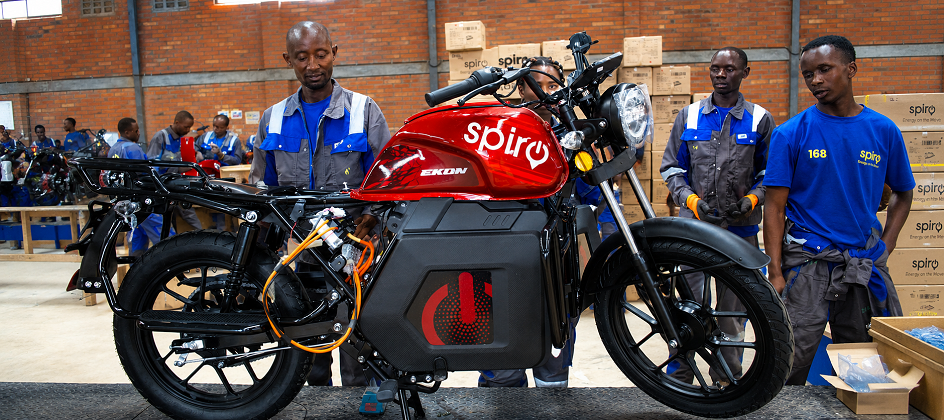
Spiro, Africa’s e-mobility leader, has entered into a one-year partnership deal with Kenyan football club Gor Mahia.
“The partnership brings together Kenya’s largest electric mobility company and Kenya’s most successful football club in a collaboration that seeks to leverage the reach and influence of football to engage communities, strengthen connections with supporters and increase awareness of electric mobility solutions across Kenya,” said Vishal Mittal, Country Head, Spiro Kenya, in a statement seen by Condia.
This year, Spiro has raised $320 million in disclosed funding, expanded into countries, and now claims roughly 95,000 bikes in circulation. It’s also accelerating plans to manufacture 90% of its vehicle components locally by early 2027.
Spiro, a subsidiary of Equitane, a Dubai-headquartered firm, operates independently under the leadership of CEO Kaushik Burman. In 2022, when it entered the Kenyan market, the market was still in its infancy, with just 796 registered electric vehicles nationwide. By the next year, the number had more than tripled to 3,753. Since then, Spiro has expanded into more than 8 markets and secured the highest EV funding of any company on the continent.
Read also: 5 African startup sectors set to benefit from the World Cup
Why African startups partner with football teams
In Africa, football is the dominant sport by a wide margin. The CAF Africa Cup of Nations (AFCON) Morocco 2025 alone generated 6 billion digital views and 5.2 billion video views. For consumer-facing startups trying to reach a 300-million-strong youth population without feeling like an ad, that’s a hard number.
“Football remains one of the most effective platforms for reaching and engaging communities. By combining Gor Mahia’s extensive supporter base and national reach with Spiro Kenya’s commitment to advancing electric mobility, the two organisations aim to create meaningful opportunities for public engagement while promoting greater awareness of sustainable transportation and its contribution to Kenya’s economic and environmental future,” the statement read.
Spiro, despite holding a leading market position, wants to tap into football to gain further visibility.
These collaborations help accelerate market penetration, drive user acquisition, and build brand trust and credibility. Research has shown that over 90% of fans notice brands during live sports, and 75% feel more positively about companies that sponsor their favourite sports.
Spiro is not the first mover in this direction. In May 2022, pan-African remittance fintech Mukuru signed on as the official sleeve sponsor for English Premier League side Crystal Palace. Sporting Lagos FC, a club founded by Paystack co-founder Shola Akinlade, has attracted sponsorship from fintechs such as Kuda, which is the headline kit sponsor in 2026, and Klasha. Akinlade also acquired a majority stake in Danish football club Aarhus Fremad.
Meanwhile, some companies decide to own the game itself. Nigerian fintech platform Cardtonic launched a grassroots club, Tonic FC, and Spiro Uganda ran its own Boda Boda Football League in February 2026.
Of the continent’s 12 unicorns, Flutterwave, Wave, and ChipperCash have all used football as a customer acquisition strategy.
Read also: The tech behind the new FIFA World Cup ball
The phenomenon is not unique to startups or Africa alone
Recently, Rwanda signed a reported $26 million-a-year sponsorship deal with Aston Villa, an English Premier League club, to promote tourism. As part of the deal, the team would visit the country, thereby attracting the desired attention.
The same logic has been applied globally. Samsung, HP, Pepsi, Coca-Cola, Emirates, Qatar Airways, Unilever, and DHL all sponsor global events like the FIFA World Cup and the Olympics for the reach they provide.
Eliud Owano, Patron of Gor Mahia FC, framed the Spiro deal in similar terms: “The partnership reflects the growing role of football as a platform for community engagement and innovation… and we look forward to a partnership that not only supports the club but also helps create greater awareness of electric mobility and its potential to positively impact communities across Kenya.”
The bottleneck of this strategy is that national and international teams already command startup attention and, increasingly, competition for sponsorship slots. As that space tightens, expect startups to look sideways at less popular but visible sports like tennis and volleyball.