Delta State Polytechnic students say mobile data is eating half their monthly allowance
A survey of Delta State Polytechnic students shows many spend up to half their monthly allowance on mobile data, leaving little for food and transport.
Promoted
Your Business Needs More Than a Website.
Custom software, automation, web apps, mobile apps and business systems built around how you work.
Build digital systems around the way your business operates.
Explore Software Services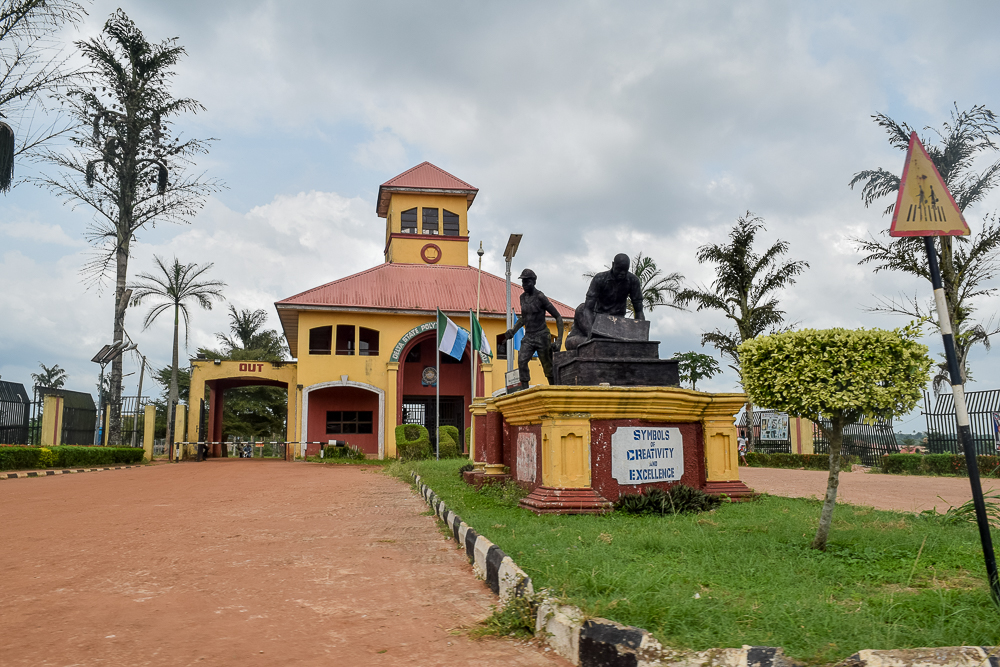
In a survey of 40 students at Delta State Polytechnic, Ogwashi Uku, every respondent named mobile data as their single biggest monthly expense, ahead of food, transport, or any other out-of-pocket expenses.
On average, students said they spend between ₦5,000 and ₦25,000 a month on data, while their monthly allowance ranges from ₦20,000 to ₦40,000. For many, that leaves as little as ₦15,000 for food, transport and everything else in a typical month.
“If you ask me to list the important things in my life, data is number two,” said Chidera Arinze, an accounting student, laughing.
Victory, another student, put it more bluntly. “No matter how life dey face you, you must get data. That is what happiness depends on. I cannot go a day without data.”
Airtel is less expensive and lasts longer. MTN is costlier and runs out
Most of the students surveyed use MTN, with about one in five on Airtel. The two networks deliver very different value for money. MTN users said their plans do not last the stipulated time and so it costs more, typically ₦25,000 to ₦35,000 per month. Airtel users said they spend far less, around ₦5,000 to ₦10,000, but that their data often expires before they finish it.
Victory, who sells gift cards to fellow students and uses Airtel, said he manages his usage carefully to protect money he needs for other things. “I might not use it, and it expires. I only turn on my data when I want to attend to clients. I try to ration it. I spend 15% of my allowance on data. If I begin to spend 50%, that means I will not have money for transport.”
A national pattern
The pressure these students describe shows a wider trend. Nigeria’s monthly mobile data usage grew by roughly 140% between January 2023 and November 2025, from about 518,000 terabytes to more than 1.23 million terabytes. Total consumption crossed 4 million terabytes in the first quarter of 2026. For students living on a fixed allowance, that growth in usage has not been matched by a comparable cushion in their pockets.
The Federal Government’s Nigerian Education Loan Fund, NELFUND, sets its monthly student upkeep stipend at ₦20,000. Against that baseline, the numbers students gave for data alone are striking.
Sarah said she spends ₦3,500 every two days on data, which, by her own math, comes to more than ₦50,000 a month. Precious said the plans look workable in theory, but in practice, “it is as if they are sucking it,” since she often ends up buying a new daily plan more than once in the same day.
None of the students said they use T2 mobile network, best known in Nigeria for cheaper data, despite the savings it might offer.
The importance of data in today’s offline learning environment
For some students, running out of data has had academic consequences. “I have missed a test because that day I did not have data, so I did not see the message,” Victory said. “It was none of the lecturer’s business. A lot of things in school depend on data these days. If I do not have it, I borrow, or I tell my friend to put me on their hotspot.”
That informal safety net has its own strain. Ifeoma said that when network providers restricted borrowing last month, it disrupted the system students relied on to get by.
Most students said the school once had free WiFi, but it has been down for months. Some said they were never aware any free WiFi existed at all. Network reception also varies depending on where you stand on campus. Reception is weak in lower-lying areas, such as the school market, but is better near the main gate.
Only one of the 40 students surveyed said they use their data primarily for schoolwork. The rest named TikTok as the app that consumes the bulk of their data, with WhatsApp a distant fourth, used to stay updated on coursework. So, students describe data as essential to their education, but most of what they are paying for is not education at all.
Read also: How Africa is being priced out of the creative economy
They were unanimous in the view that current prices do not reflect economic realities, and several called for an adjustment. Gloria pointed to examples, such as Google‘s free one-year student access to Gemini Pro, as gestures Nigerian network providers could borrow.
The industry side
The pricing pressure students describe is not happening in a vacuum. In January 2025, the Nigerian Communications Commission approved a 50% increase in telecom tariffs, the first adjustment in roughly 11 years. Operators argued the increase was overdue, citing losses in the early part of 2024.
A review launched by the NCC with consultancy firm KPMG in June 2026 is focusing on interconnection pricing. It is the first comprehensive review of that framework in nearly a decade and could eventually feed into retail pricing, but it is not, on its own, a review of what consumers pay for data. Whether either process translates into real relief for students paying out of pocket remains an open question.
As Victory summed it up: “No matter the price, let the data last the stipulated time.”
All the names have been changed to protect the students’ privacy.