FoodCourt’s shutdown is a reminder of how hard the food business really is
Demand alone isn’t enough in food tech. Here is why tech-enabled food businesses struggle in Nigeria.

Promoted
Your Business Needs More Than a Website.
Custom software, automation, web apps, mobile apps and business systems built around how you work.
Build digital systems around the way your business operates.
Explore Software Services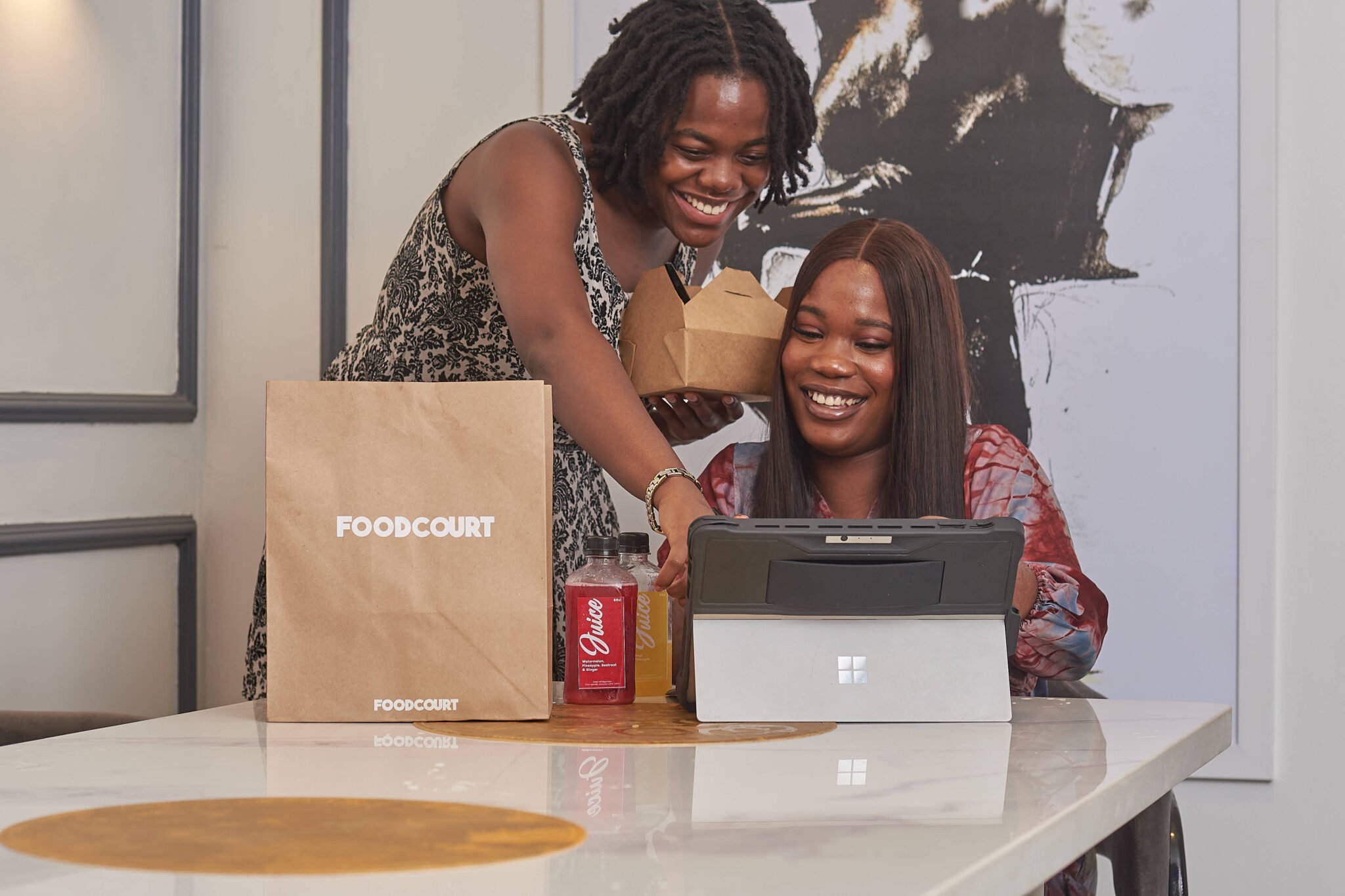
Last week, FoodCourt, a YC-backed food delivery startup, temporarily suspended operations. Meanwhile, fellow YC startup Chowdeck delivered over ₦1.5 billion worth of groceries in a month.
It is tempting to see these as two unrelated stories, but they are not. Together, they offer a reminder of the realities of building a food-tech business in Nigeria. FoodCourt’s CEO, Henry Nneji, explained that the suspension was not driven by one event. Instead, it was the result of operational, organisational and working-capital pressures. But this wasn’t always the case.
In 2024, FoodCourt was in a great place. It reportedly had over $4 million in annual recurring revenue, was profitable and planning expansions into Abuja and outside Africa; it also launched additional food brands to serve different customer segments. On paper, this looked like a company that had figured out how to survive in one of Nigeria’s toughest industries.
Less than two years later, it is suspending operations. The easy explanation is to assume this was simply an execution failure, but that would be too simplistic.
“You can tell it’s not an execution problem because these things have happened across different companies and it’s not peculiar to startups,” Orevaoghene Ben-Orupete, a marketing specialist who previously worked at Eden Life, shared. “Even restaurants close a lot in Lagos. It’s just a lack of patronage because Nigerians have a lot less money now that buying food [online] is not an option for many people.”
FoodCourt has delivered more than one million meals across Lagos and Abuja. Judging from the number of customers asking for the reinstatement of specific meals and recipes in recent months, the company clearly knew how to make food people wanted. So demand was, likely, not the problem; sustainability was.
Food is one of the few businesses where “build it, and they will come” can actually hold. If you consistently cook good food, people will find you. It may take some time, but demand usually isn’t the hardest part; keeping the business alive is.
Running a cloud kitchen or food-tech company means getting dozens of variables right every single day. Internally, there are costs you can control—rent, salaries, equipment, packaging, technology, kitchen operations, and delivery logistics, if you choose to manage them yourself.
Then there are the things you barely control. Ingredient prices fluctuate. Suppliers become unreliable or go out of business. A conflict on one continent sends fuel prices rising. Electricity tariffs increase while inflation erodes consumers’ purchasing power.
Every one of these changes affects already-thin margins, and suddenly, customers who ordered three times a week begin ordering once a week.
When expansion does not pay
FoodCourt’s 2025 expansion into Abuja did not go as planned. “Based on the information available to us then, we believed it was the right decision for the business and would strengthen our long-term position. As with many growth initiatives, circumstances ultimately evolved differently than anticipated,” according to CEO Nneji.
Expansion almost always comes with a lag between investment and returns. New kitchens have to be fitted, staff hired, customers acquired, and operations stabilised. It is entirely normal for a new market to lose money before becoming profitable.
But considering the company eventually suspended operations across both Abuja and Lagos, it seems unlikely that expanding into Abuja alone explains the outcome. Instead, it is plausible that the core business was already under pressure, and the expansion was a last-ditch effort to salvage the business.
The additional food brands, for example, may not have produced the results the startup expected. Launching multiple virtual brands is a common strategy in cloud kitchens because it allows operators to target different customer segments using the same kitchen infrastructure. In theory, that should improve asset utilisation, but in practice, it also introduces additional operational complexity, inventory management challenges and marketing costs.
Meanwhile, the Nigerian economy has not been the most forgiving. Food inflation has remained among the highest in the world over the past two years; electricity tariffs have increased, and petrol prices have more than doubled since fuel subsidies were removed.
However, food businesses cannot simply pass those increases on to customers as they already exist in one of the most price-sensitive markets in the economy. Raise prices too aggressively and customers move to another vendor or to an Instagram food seller operating from home with significantly lower overheads. If that fails, they can always cook at home.
Not even delivery costs are an avenue to recover costs, as Nigerian consumers have repeatedly shown resistance to paying higher delivery fees. For instance, Chowdeck, which raised a $9 million Series A, faces public complaints whenever delivery prices increase.
Is there hope for the food-tech sector?
Globally, food delivery has never been an especially attractive business from a profitability standpoint. Companies like Deliveroo have spent years working toward adjusted EBITDA margins of just a few percentage points of gross transaction value. DoorDash only recently achieved consistent profitability after years of scale.
Those challenges are compounded in Nigeria, thanks to some of the reasons outlined earlier. Perhaps this explains why experienced investors have approached the sector with caution.
When Swoop announced its $7 million raise, one Africa-focused investor remarked. “When foreign investors come in and refuse to heed the signals and advice of local investors, one of two things is true: either they know something we don’t — or they’re about to find out.”
More recently, Ventures Platform founder Kola Aina revealed that the firm passed on investing in Chowdeck not once, but twice. That does not necessarily mean those businesses are poor investments. Chowdeck continues to grow and appears to be executing well, but it does suggest that investors closest to the market understand just how unforgiving the economics can be.
Some companies appear to have recognised these realities early. Mano, for example, deliberately concentrated operations within a relatively small geographic area rather than expanding aggressively. That decision may limit growth, but it also limits operational complexity and burn.
Chowdeck’s growing grocery business is another interesting development. Grocery delivery reportedly accounts for about 11% of its business after crossing ₦1.5 billion in monthly order value. Whether that business line is profitable remains unclear, but it is an attempt to increase customer frequency beyond meals alone.
The challenge with restaurant delivery is frequency. Most people don’t order restaurant food every day. Groceries, however, are purchased far more regularly. If companies can increase ordering frequency while spreading customer acquisition costs across more transactions, the economics begin to look slightly more attractive.
As Ben-Orupete notes, with the cost-of-living crisis forcing many households to reconsider discretionary spending, ordering prepared meals is often one of the first expenses to be reduced.
“There’s only so much you can price your food before you price yourself out of the market,” he notes.
Demand for food will always exist. In fact, it will continue growing as Nigeria’s population increases and urbanisation accelerates. But demand for delivered food is different from demand for food itself. That depends on disposable income, convenience, pricing and habit, all of which become fragile during difficult economic periods.
Many people will continue building food businesses in Nigeria because the opportunity exists. As Taiwo Akinropo, CEO of HeyFood, another YC-backed food tech, told Condia, “The market is always growing; it would be bigger five years from now, not shrink, and in 10 years, Africa is projected to have 140 million young professionals, so the opportunity is going to be endless.”
However, FoodCourt’s story is a reminder that opportunity alone is never enough. For founders, the biggest competitive advantage isn’t menu quality or customer acquisition tactics. Instead, it is operational efficiency.
Can you acquire customers who stay longer and spend more without relying on subsidies? Can you negotiate better supplier contracts? Can you reduce food waste? Can you improve kitchen utilisation? Can you keep delivery costs from growing faster than revenue? Can you expand without stretching working capital beyond its limits?
Those are harder questions to answer when your core inputs are constantly shifting, but they ultimately determine who is still around a decade from now.