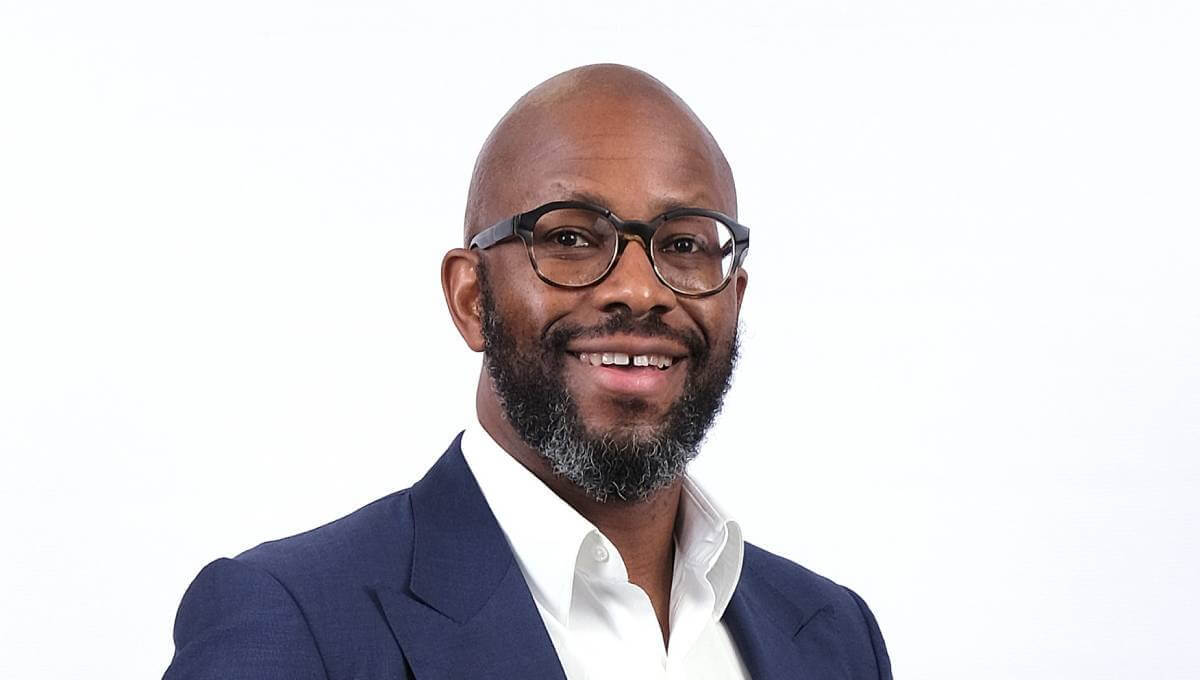
Level Up: How Fikeyinmi Odulaja went from being rejected to landing roles at global companies
In this conversation, she talks about how not being afraid to be seen trying has proved successful, how she made up an excuse to quit law, and how learning to follow her curiosity

Promoted
Your Business Needs More Than a Website.
Custom software, automation, web apps, mobile apps and business systems built around how you work.
Build digital systems around the way your business operates.
Explore Software Services
As a child, when Fikeyinmi Odulaja watched the Cinderella story starring Hilary Duff, she took note of a line that she says sums up her career so far: “Don’t let the fear of striking out keep you from playing the game.
She had just earned her law degree when she decided to move into tech. Five years on, she has applied to several companies, been rejected by a global streaming company, worked in product at American Express, and now has a role at Samsung Electronics UK.
Along the way, she founded The Kumu Circle, a community for ambitious African women, and recently started writing Fike’s Index, a newsletter tracking AI development across Africa.
In this conversation, she talks about how not being afraid to be seen trying has proved successful, how she quit law, and how learning to follow her curiosity has helped her build a career where all the pieces come together at the end.
If your career were a movie, what would the title be and why?
“Plot Twist.” I always think I’m going down one road, and then something happens, and it’s like, actually, no.
I moved back to Nigeria after studying law in the United Kingdom. During my time in law school, I told myself I’d return to the UK to do my training contract there. I kept applying and kept getting rejected.
Before getting into tech, I had a stint in law. I was working with brilliant people on great deals, but I didn’t feel like that was where I was supposed to be. When HR asked if I wanted to stay on, I told them I was going back to the UK to do a masters. That wasn’t true. I just didn’t know what else to say. I knew I wasn’t meant to practise law anymore, but I couldn’t say that out loud yet.
I left without knowing what I was going to do. A couple of weeks later, I found a product role at Zenolynk Technologies. There have been a lot of plot twists. I’m going in one direction, and then I’m like, “It’s time to change course.”
What sparked your interest in tech?
When I decided to leave law, I did a lot of those online career quizzes. One told me I should start an ice cream truck, which maybe I still will one day. But then I didn’t have any capital, and I wanted to work in an establishment, so I looked into front-end development and web design instead. I tried coding and knew immediately I didn’t want to do that.
But I realised technology is an industry that’s always evolving. And for someone who gets bored easily, that’s actually the right place to be, because you keep learning as the industry keeps changing. There’s always a new challenge.
With how AI is going, I think that instinct was right. I’ve always been curious about apps and interfaces, asking why something wasn’t designed a certain way. I started using ChatGPT as soon as it launched. I just like trying different tools.
What got you into a role at a company like American Express?
I’ve always been a hard worker. I struggled with certain subjects in school. I could get top scores in history, English, and literature but really weak scores in maths, so I had to work extra hard to bring a D up to a B. I’ve carried that into everything since. I try to improve, take feedback even when I don’t like it, and put my best work forward. Hard work, a lot of grace, and following my intuition. And here’s a pro tip: one big name on your CV opens the next door.
My first big name felt like it just happened. I was at Zenolynk Technologies in Lagos, loved working there, and still have a great relationship with my boss from that time. But I wanted to move back to the UK. In parallel, I’d done three or four rounds of interviews for an associate product management scheme at a global streaming company and was convinced I’d get in. They ghosted me for three weeks.
I found the interviewer online and messaged her asking for an update. She set up a call, and I remember thinking, “They wouldn’t set up a call just to reject me, would they?” They would. There’d been a mix-up after my recruiter left the company, and no one had followed up.
After you get that close to something like that, you can’t look at anything else the same way again. I kept applying to entry-level product roles, which were rare even then. I don’t actually remember sending my application to the recruiter at Amex, since I didn’t log it the way I logged everything else.
When the email came through, I genuinely thought it was spam. It wasn’t. Two interviews later, I had the role. One of the people who interviewed me became a close friend and colleague. She told me later that what stood out was my personality and attitude. You need to be able to do the job, but attitude has taken me far too.
What’s the story behind the name The Kumu Circle, and what’s the vision?
The Kumu Circle is a professional and personal development community for ambitious African women. The vision is to bring them together, connect them, share resources and opportunities, and have the conversations that help us level up in our careers, personal lives, or the businesses we’re building.
I want a global network where a woman can say she’s going to Kenya and find someone from Kumu who can show her around or connect her to a job or business opportunity. I picture Kumu having physical spaces in major African cities, almost like a Soho House. I believe strongly in the power of community and that you go further when you go with people.
You started The Kumu Circle in January 2021, just two months into your own product career. What made you start building for other women before you’d found your own footing?
I’d just finished NYSC at the end of 2020, the same year I left law for product management. While I was still at the law firm, a friend and I kept having the same conversations about how to think about money and where to put it. When she told me she didn’t have people to talk to about this. I thought, we shouldn’t all be having these conversations in silos. Why not bring them together?
At the time, I had a newsletter and used to post on Twitter (X), aimed specifically at women in their 20s seeking clarity about their careers and lives. It was just me documenting my own journey, and other people resonated with it. At its peak, we had around 100 women in a WhatsApp group, helping each other with job interviews, sharing dilemmas, and checking in on each other’s goals for the week.
What is the most common mistake you see ambitious women get wrong in their careers?
I wouldn’t call it a mistake, but I’ve noticed that brilliant women often can’t see themselves. I know this because last year alone I did about 30 free career coaching calls with women across Nigeria and beyond.
They come to me saying they don’t know what to do or that they’re scared. But when we talk it through, they usually do know where they want to go. They’re just not sure how to get there, and that uncertainty can feel confusing, even frightening.
That’s part of why we launched a flagship event called The Plot Twist in December: a peer-coaching workshop to figure out your next move once you already know the destination. It sold out, and we’ve had requests to run it in Accra and Toronto since.
You’ve built a career spanning law, product, a community and AI. What’s the personal cost of that kind of ambition?
I’ve had the exact same experience of not knowing what’s next and freezing because of it. The Kumu Circle actually paused between 2023 and the end of last year, partly because I’d moved back to the UK and partly because I didn’t know which direction to take it. There’s a real fear that comes with your own ambition and a struggle to contain it.
I tried doing just my 9-to-5 in 2024, and while I had a great year at work, I didn’t feel as fulfilled. I’m someone who’s more than one thing, multi-passionate, whatever term you want to use for it. It can be hard to know what to focus on.
I asked Emma Grede, podcast host and four-time founder, how she assesses which opportunities to pursue. She told me to follow the money. That’s good advice, but sometimes the money isn’t there yet even when the potential is. I’m learning this year to be strict with myself about focusing on a small number of things.
I’d also push back a little on the idea that ambitious African women are rare. My community is full of them. I think ambition just doesn’t look one way, and I care about women being able to define it for themselves. Your ambition might be building wealth, impacting your local church, or moving your family from one circumstance to another.
It doesn’t have to look like making $10 million a week. It’s about what drives you, how you use that drive, and the impact you have on others. That can look different for everyone.
How do you switch between the different roles product, community building, and now an AI newsletter require of you?
I don’t think they require different things at all. One thing has consistently led to another across my career. I only recently started an AI in Africa newsletter, but AI sits under technology, which is what I do at Samsung, where I’m an independent contributor for our digital wallet product. That keeps me thinking about the tech ecosystem, and Kumu is a professional and personal development community, which is something people think about even in the workplace.
Everything feeds into everything else. I bring what I learn at work into the community, and we run an AI club at Kumu now, because you can’t be talking about your profession in 2026 without discussing AI, its ethics, its safety, how it should be governed, and how to actually use it well.
So for me, everything is interconnected. The skills you use in one place often feed the other, and the skills you’re learning in one place often help you in the next place. So that’s how I think about it.
Just like one flywheel, one circle.
As a product manager, what’s your take on agentic commerce?
I find it genuinely interesting. I’ve written that I’d let an AI agent shop for me using a preloaded card. AI is customisable, so you can set your own boundaries around what it’s allowed to do. I don’t enjoy shopping, so the idea of telling an AI what I want a dress to look like and letting it handle the process without me is exciting. But I’d load that card with something like $10, so that even if the AI tried to order 100 dresses, there’d be no money left to complete the order. There are real safety concerns, and I’m interested to watch how the space develops.
What are your thoughts on building agentic commerce?
The same first principles apply that apply to any product. That’s something I took from a workshop with Tobi Otokiti, Founder of Product Dive. You start with your use case, who your user is, who your customer is, and what problem you’re actually solving. You don’t include AI just because you can.
The real questions are whether an AI agent checking out on your site is actually the right solution, what you’re selling, and what the use case for that would be, versus something like letting people create a digital twin to try on clothes instead. Define the problem, test the best way to solve it, take feedback, and iterate. Those foundational principles don’t change just because AI is involved.
To close, what’s one surprising thing or failure from your career?
I once got rejected for a role, then was asked to come back and complete the interview process anyway. I ended up joining the team and then resigned because I didn’t enjoy the experience. Looking back, I wonder if I should have just said no when they asked me to come back. But I don’t think anything is wasted. You learn something from every experience, and you can’t be successful without some failures, because that would mean you weren’t trying anything at all. That’s how I think about my low points.
Want to read more career stories like this? Subscribe to the Level Up Newsletter.