President Tinubu signs order to coordinate virtual assets regulation
President Tinubu has signed an executive order creating a coordinated framework for virtual assets, with the CBN chairing a new council overseeing regulation.

Promoted
Your Business Needs More Than a Website.
Custom software, automation, web apps, mobile apps and business systems built around how you work.
Build digital systems around the way your business operates.
Explore Software Services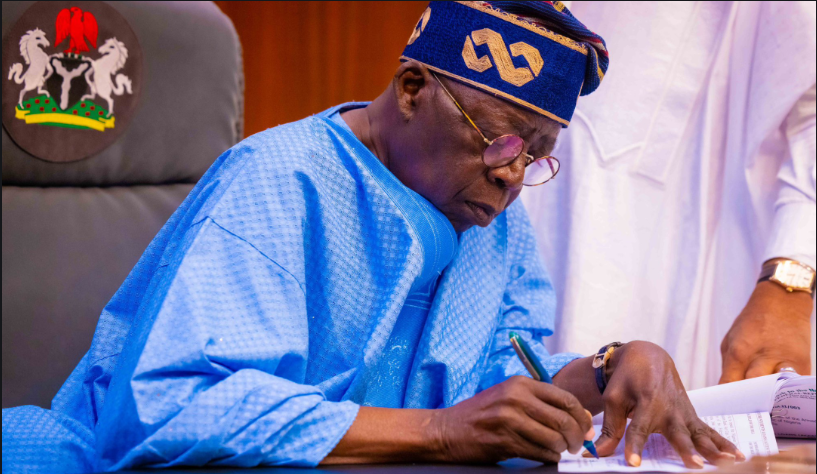
Nigeria’s president, Bola Ahmed Tinubu, has signed an executive order aimed at bringing greater coordination to the country’s virtual asset sector.
The order, announced in a statement by presidential spokesperson Bayo Onanuga, seeks to harmonise the regulation of virtual assets, protect citizens from fraud, and strengthen cooperation among financial, revenue and capital markets agencies. It comes as virtual assets continue to grow in popularity among Nigerians despite years of shifting regulatory positions.
The executive order establishes a Virtual Asset Council tasked with providing policy direction and promoting cooperation among participating agencies. The council will be chaired by the Central Bank of Nigeria (CBN), with the Nigeria Revenue Service (NRS) and the Securities and Exchange Commission (SEC) serving as vice-chairs. The Nigerian Financial Intelligence Unit (NFIU) and the Office of the National Security Adviser (ONSA) will also sit on the council.
A Virtual Asset Office will serve as the council’s operational arm, coordinating day-to-day information sharing, applications and reporting among participating agencies.
Importantly, the executive order does not create a new regulator or transfer powers between agencies. Instead, it is designed to reduce overlaps and close regulatory gaps while allowing each institution to retain its existing statutory responsibilities.
“To provide certainty for operators and protection for the public, registration will follow the nature of the activity and the asset involved: activities like securities will be registered by the SEC, while payment, settlement, custody and related services involving non-security virtual assets will be registered by the CBN, with the Council resolving any case in which responsibility cannot be readily determined,” the statement said.
The CBN will also proceed with a regulatory sandbox for virtual assets, allowing companies to test blockchain-based products and services under regulatory supervision before they are introduced more broadly. The central bank is expected to announce further details of the sandbox.
Similarly, the Nigeria Revenue Service will release a tax policy for the sector, providing guidance on how existing tax laws apply to virtual assets. The federal government is also finalising a Virtual Assets White Paper that will outline the country’s long-term policy direction.
Virtual assets have become increasingly popular among Nigerians, many of whom use cryptocurrencies and stablecoins for cross-border payments, remittances and as a hedge against the naira’s depreciation. Others have embraced them for speculative trading. That growth has, however, exposed weaknesses in Nigeria’s fragmented regulatory framework, with different agencies often taking differing positions on oversight.
The CBN, for instance, has not always embraced virtual assets. In 2021, it directed commercial banks to stop facilitating cryptocurrency transactions, effectively shutting the banking system to crypto-related businesses.
While that restriction was eased in 2023 when banks were allowed to provide services to licensed virtual asset firms, the central bank has maintained a cautious approach. More recently, however, it has acknowledged the potential role of regulated stablecoins in improving payments and supporting financial innovation. It also announced the creation of an AML/CFT/CPF pilot for virtual asset service providers.
The SEC, on the other hand, has emerged as the country’s primary regulator of digital assets. It has introduced rules for virtual asset service providers and granted provisional licences to several crypto exchanges and digital asset firms under its Accelerated Regulatory Incubation Programme.