Why this fund is investing in African AI founders under 25
Oakvale Invest is betting on African AI founders under 25, backing young entrepreneurs with patient capital.

Promoted
Your Business Needs More Than a Website.
Custom software, automation, web apps, mobile apps and business systems built around how you work.
Build digital systems around the way your business operates.
Explore Software Services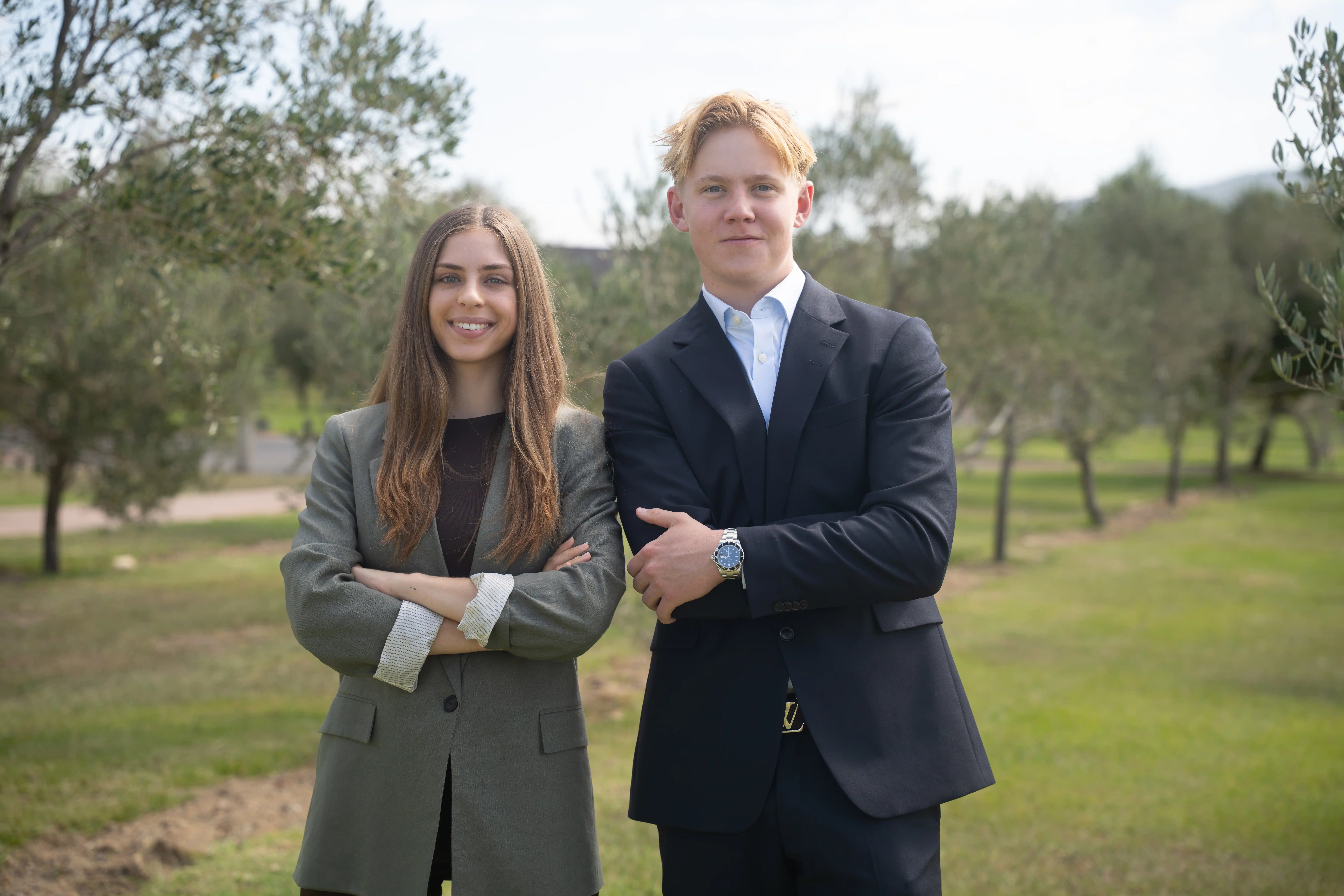
Sixty-one per cent of global venture funding in 2025 went to artificial intelligence startups. That translated to roughly $258.7 billion, making AI by far the biggest magnet for venture capital. The momentum has only accelerated in 2026.
PitchBook data shows AI companies accounted for 87.5% of all venture funding in the first half of the year. But Africa tells a very different story.
While billions continue flowing into AI companies in Silicon Valley, Europe and parts of Asia, African AI startups raised less than $50 million in 2025. The disparity highlights just how limited investor appetite for AI on the continent remains despite the global frenzy.
It is against that backdrop that Oakvale Invest is launching. The investment firm, which only began operations in April 2026, is making a series of bets that go against conventional venture capital wisdom.
First, it is investing at the pre-seed stage at a time when early-stage funding across Africa continues to shrink. Second, it is backing founders between the ages of 18 and 25. And finally, it is investing exclusively in AI startups. Its structure is equally unconventional.
Although Oakvale Invest was founded by experienced Swedish entrepreneur and business executive Henrik Persson Ekdahl, the firm’s investment activities are largely led by Herman Ekdahl and Michaela-Jayne Stewart, who are 18 and 21 years old, respectively.
Not a VC firm
Before launching Oakvale Invest, Ekdahl had already built a long career across Europe’s online gaming industry.
He founded and led several companies, including Betsafe, Bestgameholdings, Betsson Group and Catena Media, building businesses across multiple markets before relocating to South Africa four years ago.
Since moving, he has become increasingly involved in the country’s startup ecosystem through investments and advisory work while continuing to back businesses privately.
One distinction the team is quick to make is that Oakvale Invest is not a traditional venture capital firm. It is structured more like a family office.
Unlike venture capital funds that raise money from limited partners and work within defined investment timelines, Oakvale Invest invests its own capital. It is therefore under less pressure to produce exits within a fixed period or optimise every decision around fund returns.
Read more: INTERVIEW: How Africans can get ahead in the AI race
For Herman Ekdahl, that creates room to think differently. While many venture firms constantly weigh investments against their potential exit value, Oakvale says it is far more interested in supporting founders over the long term than worrying about acquisition opportunities or IPO timelines.
Instead of asking how quickly an investment can return capital, it asks whether the founder is building something worth supporting over several years.
That philosophy also shapes how the team intends to work with founders after writing its first cheque.
“We are very much patient capital,” Herman says. “When we invest, we want to walk the journey with the founders and support them the entire way.”
Why artificial intelligence?
Oakvale’s focus on AI comes at a time when investors globally are racing to back almost anything connected to artificial intelligence.
Yet while enthusiasm has reached unprecedented levels elsewhere, African AI startups continue to account for only a tiny fraction of venture activity on the continent.
Rather than viewing Africa’s relatively small AI ecosystem as a weakness, the firm sees it as an opportunity to invest before competition for deals inevitably intensifies.
“AI is revolutionising how we do everything today,” Herman says. “It is the most game-changing technology that has been released in the last couple of years, and it’s going to have a massive impact on the world.”
But the team is also careful about the kind of AI companies it wants to back. It has no interest in startups simply wrapping existing large language models with thin layers of functionality.
Instead, Oakvale wants companies applying AI to solve meaningful problems within traditional industries such as healthcare, manufacturing, logistics, agriculture and business software.
An investment firm for youngsters, by youngsters
Investment has traditionally been an industry dominated by older professionals. Even junior investment roles are typically occupied by people in their late twenties or thirties after several years in finance, consulting or startup operations.
Oakvale looks very different. Its investment associates are 18 and 21 years old, and for many founders, they are among the youngest investors they are ever likely to pitch.
Rather than seeing that as a disadvantage, both Herman and Stewart believe it allows them to better understand the founders they hope to support.
Many of the entrepreneurs they meet are navigating similar life stages, building their first companies while still in university or shortly after graduation. The conversations therefore feel less hierarchical and more collaborative.
The firm’s age focus also reflects a broader belief that some of Africa’s most ambitious AI founders will emerge much earlier than previous generations of entrepreneurs.
With AI dramatically lowering the cost and complexity of building software, talented young developers can now launch products with relatively small teams and limited capital. Oakvale wants to meet those founders before everyone else does.
Of course, youth also comes with limitations. Unlike established venture firms, Herman and Stewart acknowledge they cannot promise decades of operational experience or extensive founder playbooks.
Instead, the investment team leans on a network of AI specialists who assist with technical due diligence while also mentoring portfolio companies.
Henrik’s decades of entrepreneurial experience also provide founders with access to business advice and strategic guidance that complements the younger investment team’s perspective.
Still, not everyone is convinced. Herman says other investors have occasionally questioned whether people their age should be making investment decisions but it is criticism he has grown accustomed to.
Betting on founders before everyone else
Earlier this month, Oakvale announced its first investment. The firm committed ZAR1 million (~$60,000) to Tennsa, an AI-powered software company building solutions for small and medium-sized businesses.
According to Herman, founder Rivar Maharaj embodied many of the qualities the firm looks for in entrepreneurs.
Before launching Tennsa, Maharaj had participated in several hackathons while experimenting with multiple startup ideas as a student. Those experiences demonstrated persistence, curiosity and a willingness to keep building even after setbacks.
The firm has earmarked approximately ZAR200 million (~$10 million) for investments and expects to back as many as 30 startups over time.
Rather than working with fixed cheque sizes, Oakvale says it intends to determine investment amounts based on each startup’s specific needs. Being structured as a family office also does not mean the firm intends to operate in isolation.
Stewart says the team has spent much of the past few months building relationships with venture capital firms across Africa in preparation for helping portfolio companies raise follow-on funding.
Although Oakvale may have a longer investment horizon than traditional VC funds, it still expects its founders to eventually raise institutional rounds. Its investment thesis, however, remains uncompromising on one point — if a founder is older than 25, they simply do not qualify.
Building with today’s AI
One question hanging over Africa’s AI ecosystem is whether startups can build globally competitive companies while relying largely on foundational models developed elsewhere.
Unlike companies in the United States that are building frontier AI models, most African startups today are leveraging models from OpenAI, Anthropic, Google and others to create applications.
Some critics argue that dependence could limit innovation. Stewart disagrees. She believes founders should focus on solving meaningful problems with the tools currently available instead of worrying about building foundational models from day one.
Using existing large language models allows African startups to move faster, validate markets and create value while the broader ecosystem matures.
Over time, that experience could eventually create the conditions for locally developed foundational AI models.
For now, she argues, there is far more opportunity in applying AI effectively than trying to recreate the infrastructure powering it. Looking ahead, Stewart says success would mean more than simply generating financial returns.
It would mean seeing every portfolio company achieve the milestones they set for themselves while establishing Oakvale Invest as one of Africa’s most recognised names in AI investing.
For a firm making bets on one of the continent’s youngest founder demographics, the road ahead is unlikely to be free of scepticism.
People will continue questioning whether founders under 25 have enough experience to build enduring companies. Others will continue wondering whether investors barely out of their teens should be deciding where millions of dollars go.
Oakvale says neither concern changes its thesis.
“As much as people might doubt us because of our age, we don’t care. They’re the ones missing out,” Herman says.